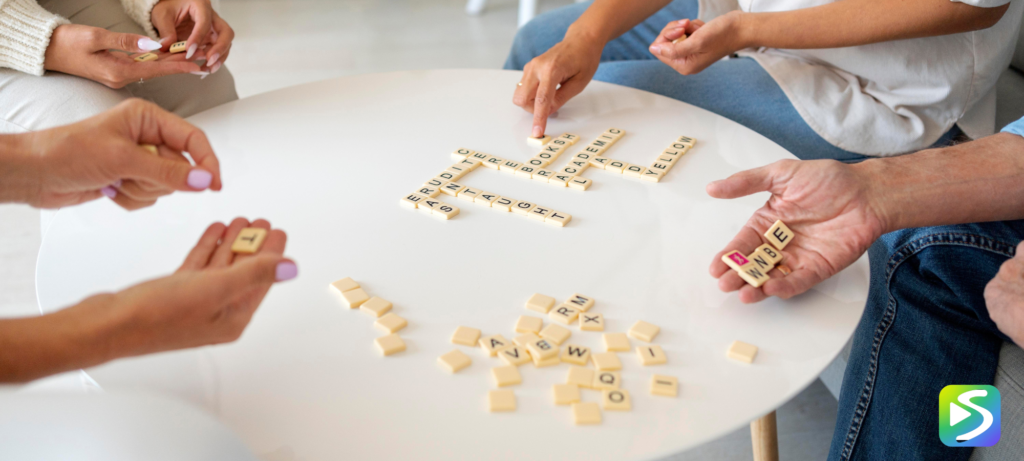

Most people understand that mental exercise matters in the same theoretical way they understand that physical exercise matters. They know it is good for them. They intend to do it more regularly. But without a specific, structured habit built around accessible activities that are actually enjoyable, the intention rarely becomes practice.
This guide is about making daily brain exercise a real habit rather than an aspiration. It covers what counts as effective mental exercise, how habit formation works, and how to build a sustainable daily routine that actually sticks — using word puzzles as the entry point, since they are among the most accessible and effective daily mental exercise options available.
What Counts as Genuine Brain Exercise
Not every mentally engaging activity produces meaningful cognitive benefit. Scrolling through news, watching television, and passively consuming content are mentally stimulating in a low-level way but do not exercise the cognitive systems that benefit most from deliberate training.
Genuine brain exercise involves active engagement — generating answers rather than receiving them, holding information in working memory under challenge, and making decisions under uncertainty with real feedback. Activities that meet these criteria include reading challenging books, learning a new skill, playing strategic games, and solving puzzles that require actual problem-solving rather than pattern matching.
Daily word puzzles — particularly harder formats like the seven-letter puzzles on the Septle — meet all three criteria. They require active retrieval, sustained working memory engagement, and systematic decision-making with immediate feedback.
How Habit Formation Actually Works
Habit research consistently points to three elements that determine whether a behavior becomes automatic: a trigger (cue), the behavior itself (routine), and a reward. When these three elements align reliably, the behavior gradually becomes automatic — something you do without deliberate decision rather than something you decide to do each time.
For a daily puzzle habit, the trigger is the most important variable. The behavior (opening the puzzle) and the reward (the satisfaction of solving it) are largely built in. What most people miss is establishing a consistent, specific trigger that activates the habit reliably regardless of how the rest of the day is going.
The most effective triggers for daily mental exercise habits are time-based anchors attached to existing routines — the first coffee of the morning, the start of a commute, the first ten minutes of a lunch break. These existing routines already activate automatically, and attaching a new behavior to them borrows their momentum.
The Problem With Motivation-Based Approaches
Many people try to build brain exercise habits through motivation — they decide they are going to be the kind of person who challenges their mind daily, they feel genuinely motivated for a few days, and then motivation fades when life gets busy and the habit is still fragile. This approach fails because motivation is an unreliable energy source for habit formation.
The alternative is to design the habit so that it requires as little motivation as possible. This means making the activity genuinely enjoyable (word puzzles are intrinsically rewarding for most people who try them), keeping the daily commitment small (ten minutes is enough), and embedding the trigger in an existing routine so that it activates automatically rather than requiring a fresh decision each day.
The streak mechanic in daily word games like Septle is particularly effective at reducing motivation dependence. Once a streak reaches two or three weeks, protecting it provides day-to-day motivation that supplements intrinsic enjoyment. You can read more about building puzzle skill on the how to get better at Septle blog, which covers the strategic side of daily puzzle habits.
Stacking Brain Exercise With Other Daily Habits
One of the most effective techniques in habit formation is habit stacking — linking a new behavior to an existing one so that the existing habit becomes the trigger. The formula is: after I do X, I will do Y. When X activates automatically, it pulls Y along with it.
For a daily brain exercise habit, effective stacks include: after I pour my morning coffee, I will open the daily puzzle; after I sit down on my commute, I will open the puzzle before anything else; after I finish lunch, I will do the puzzle before checking messages. The specific stack matters less than its consistency — pick one that fits your actual daily structure and repeat it without variation for at least two weeks.
Habit stacking works particularly well for word puzzles because they are short enough to fit into genuine micro-windows in the day — the transition between activities, the few minutes before a meeting starts, or the cooldown at the end of a work session.
Managing Difficulty: Keeping the Challenge in Range
One of the most common reasons brain exercise habits fail is that the chosen activity is either too easy or too hard. Too easy produces boredom and the habit loses its reward. Too hard produces consistent frustration that erodes motivation over time.
Daily word puzzles are well-designed for this reason — they provide a natural difficulty calibration where easier days feel satisfying and harder days feel challenging but usually solvable. The occasional genuinely difficult puzzle that beats you is part of the experience rather than a failure of the habit.
If you are finding the seven-letter format consistently too difficult, the best starting words for Septle article provides specific strategies for improving your opening approach, which makes the mid-game more manageable.
Tracking Progress and Staying Motivated Long-Term
Long-term habits benefit from visible progress tracking. Septle automatically tracks your streak and guess distribution, giving you a clear picture of whether your daily habit is actually improving your performance over time. Watching your average guess count decline gradually over weeks is a concrete signal that the habit is working.
Beyond puzzle-specific tracking, some players keep a simple journal of words they looked up or found interesting in their daily puzzle sessions. This creates an additional layer of engagement and a visible record of vocabulary growth that reinforces the value of the habit.
Frequently Asked Questions
How long does it take to build a daily brain exercise habit?
Research on habit formation suggests that most behaviors take between two and eight weeks of consistent repetition to become automatic, with the average around five weeks. For daily word puzzles specifically, most players report that the habit feels natural after about two to three weeks of consistent daily play.
Is ten minutes a day enough for meaningful cognitive benefit?
Yes. Duration matters less than consistency and engagement depth. Ten focused minutes of daily word puzzle play produces more cognitive benefit than occasional longer sessions. The key is that the ten minutes involves genuine mental challenge rather than passive activity.
What if I miss a day?
Missing one day does not break the cognitive benefits of the habit — only the streak counter in the game. The most effective response to a missed day is simply to resume the next day without guilt. The habit research is clear that occasional misses do not derail well-established habits if the pattern is otherwise consistent.
Should I do brain exercises in the morning or evening?
Morning tends to work better for most people because working memory and focus are typically at their peak earlier in the day before decision fatigue accumulates. However, the best time is whichever time you will actually maintain consistently. An evening habit you keep every day outperforms a morning habit you miss half the time.
Can I combine multiple types of brain exercise?
Yes, and combining types tends to produce broader cognitive benefits than focusing on a single activity. A daily word puzzle paired with periodic reading of challenging nonfiction covers verbal, logical, and knowledge-acquisition dimensions. Adding number-based puzzles occasionally covers spatial and mathematical reasoning. Variety across cognitive modes is generally beneficial if you have the time.