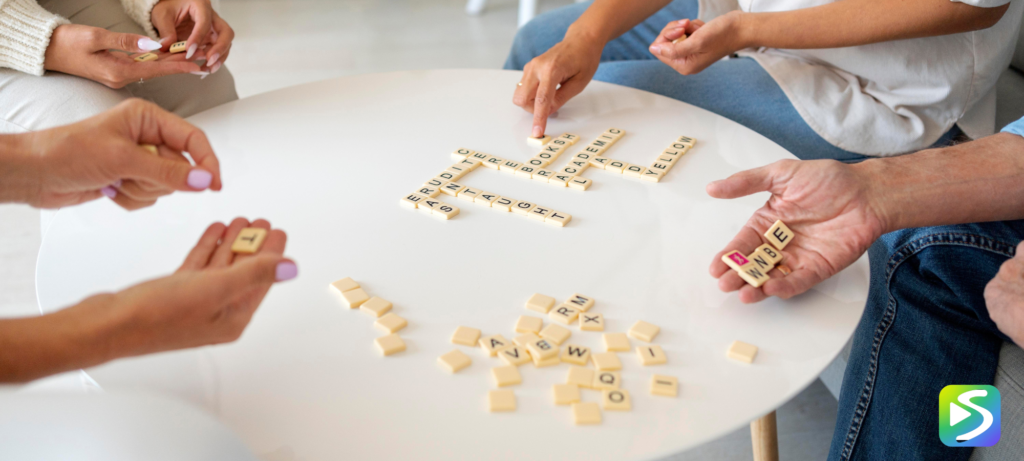

There is a particular kind of mental sharpness that comes from doing one focused thing well every day. Not scrolling, not multitasking, not consuming — just sitting with a single problem and working through it methodically until it is solved. Daily puzzles, whether word-based, number-based, or logic-based, deliver this in a compact, accessible format that most people can fit into an already full day.
This article looks specifically at the relationship between daily puzzle habits and two cognitive functions that affect almost everything else you do: focus and memory. Both are trainable, both decline without regular engagement, and both respond measurably to the kind of consistent mental exercise that a daily puzzle habit provides.
Why Focus Is a Skill, Not a Fixed Trait
Most people think of focus as something they either have or do not have on a given day. The reality is more useful: focus is a cognitive muscle that strengthens with deliberate practice and weakens with disuse. The explosion of short-form content, notification-driven apps, and constant task-switching over the past decade has made sustained attention increasingly rare — and increasingly valuable.
A daily puzzle creates a brief but genuine training window for focused attention. When you are working through a word puzzle, you cannot effectively multitask. The problem requires your full working memory, and splitting attention between the puzzle and something else means both suffer. This sustained single-task engagement, repeated daily, gradually extends your baseline capacity for focused attention in other contexts.
Seven-letter puzzles like those on the Septle require particularly sustained focus because the longer word format demands more mental tracking of confirmed and eliminated letters simultaneously. This makes them especially effective as a focus-training exercise compared to shorter puzzle formats.
Working Memory and What It Actually Does
Working memory is the cognitive system that holds information temporarily while you actively use it. It is what lets you remember the start of a sentence by the time you reach the end, follow a multi-step argument, or hold several variables in mind while solving a problem. It is not the same as long-term memory — it is the active workspace your mind uses moment to moment.
Working memory capacity is closely linked to fluid intelligence — the ability to reason through new problems rather than just retrieve stored knowledge. Improving working memory function, even modestly, has measurable knock-on effects across many cognitive tasks.
Word puzzles are unusually effective at engaging working memory because they require you to hold multiple pieces of information at once — confirmed letter positions, eliminated letters, yellow letter placements from previous guesses — while simultaneously generating and evaluating new word candidates. This is precisely the kind of multi-variable tracking that stretches working memory in useful ways.
The Role of Consistent Daily Engagement
Consistency is the variable that separates puzzle hobbyists from people who genuinely develop sharper focus and memory over time. Playing a puzzle three or four times a week produces some benefit. Playing one every single day without interruption produces noticeably more, because the brain adapts to habitual engagement patterns.
The streak mechanic built into games like Septle is not just gamification — it creates a practical accountability structure that supports the consistency required for genuine cognitive benefit. Protecting a streak motivates daily play even on days when motivation would otherwise be low, which is exactly when habitual engagement matters most.
Research on cognitive engagement and working memory consistently points to regularity and engagement depth as the two most important factors for cognitive benefit from mental exercise. Daily word puzzles score well on both.
Long-Term Memory and Vocabulary Retention
Beyond working memory, daily word puzzles contribute to long-term memory in a specific and practical way: vocabulary retention. Every word you encounter in a puzzle — whether you solved it correctly or looked it up afterward — becomes a small deposit in long-term verbal memory. Over months of consistent play, these deposits accumulate into a meaningfully expanded active vocabulary.
The mechanism is spaced repetition — one of the most well-established principles in learning science. When you encounter a word in a puzzle, fail to place it correctly, look it up, and then encounter a similar word weeks later in a new puzzle, your brain retrieves and reinforces the earlier memory. This is more effective for retention than deliberate memorization because it happens in context and under mild cognitive challenge.
The Difference Between Active and Passive Vocabulary
Most adults have a much larger passive vocabulary — words they can recognize and understand — than an active one — words they can retrieve and use spontaneously. Daily word puzzles specifically target active vocabulary because the puzzle format requires retrieval, not just recognition. You are not selecting from a list; you are generating candidates from memory.
This retrieval practice effect is well documented in learning research. Actively recalling information strengthens memory traces far more effectively than re-reading or passive exposure. The daily puzzle is, in this sense, an unusually efficient vocabulary exercise that most players are running without realizing it.
Puzzle Difficulty and Cognitive Challenge
Not all puzzles are equally effective for cognitive training. A puzzle that is too easy produces no meaningful challenge — your brain coasts through it without genuine engagement. A puzzle that is too hard produces frustration and disengagement. The puzzles that produce the most cognitive benefit are those calibrated to the edge of your current ability: difficult enough to require real effort, achievable enough to be solvable.
This is why harder daily word formats like seven-letter puzzles tend to produce more cognitive benefit than simpler formats for experienced players. Once a five-letter puzzle stops feeling challenging, it stops delivering meaningful cognitive exercise. The additional difficulty of a seven-letter format keeps the challenge threshold at a useful level for longer.
If you are already comfortable with shorter word games and want to step up the cognitive challenge, the guide on best starting words for Septle is a useful introduction to thinking strategically about the seven-letter format.
Building the Habit: Practical Suggestions
The most reliable way to build a daily puzzle habit is to anchor it to an existing routine. Most successful daily players attach their puzzle to the first coffee of the morning, a commute, a lunch break, or the transition between work and evening. The specific moment matters less than its consistency — you want the puzzle to become something you do at a predictable point in your day, not something you do when you remember.
Start with one puzzle per day for two weeks before considering adding more. Most habit research suggests that fourteen to twenty-one days of consistent behavior is enough to establish an automatic routine. Once the habit is automatic, missing a day feels genuinely odd — which is the target state.
Frequently Asked Questions
Can daily puzzles really improve focus?
Yes, with consistent practice over weeks and months. Daily puzzles create regular training windows for sustained single-task attention, which strengthens focus capacity the same way physical training strengthens specific muscle groups. The improvement is gradual but measurable and transfers to other tasks requiring concentration.
How quickly can you see memory improvements from daily puzzles?
Most people report noticeable improvements in verbal recall and working memory within four to six weeks of consistent daily puzzle play. The effect builds gradually rather than arriving suddenly. Players who have been at it for three to six months typically describe the difference as feeling like their verbal memory has become more reliably accessible under pressure.
Are harder puzzles better for cognitive training?
Generally, yes — up to a point. Puzzles calibrated just above your current comfortable difficulty level produce the most cognitive benefit because they require genuine effort without being unsolvable. Puzzles that are far too easy produce little benefit; puzzles that are impossibly difficult produce frustration rather than learning. The ideal is consistent challenge at a level you can usually solve with real effort.
Does the type of puzzle matter for memory improvement?
The type matters somewhat. Puzzles that involve verbal retrieval, logical deduction, and working memory simultaneously — like word puzzles — tend to produce broader cognitive benefits than puzzles that rely primarily on pattern recognition or spatial reasoning alone. Variety across puzzle types is also beneficial if you have time for more than one daily game.
Is playing word games on a phone as effective as paper puzzles?
The research does not show meaningful differences in cognitive benefit between digital and physical formats for word puzzles. The cognitive processes engaged are the same. Some players find paper more satisfying; others prefer the convenience of digital. Either format produces benefit if the habit is maintained consistently.