Searching for a Septle solver usually means one of two things: you are completely stuck on today’s puzzle and want a way out, or you are curious about whether computer-assisted solving changes what the game actually teaches you. Both are reasonable places to be, and this article addresses both honestly.
We will cover how word puzzle solvers work algorithmically, what they can and cannot tell you about playing better, and the more interesting question of whether using a solver occasionally makes you a worse or a better player over time. The answer is not what most people expect.
What a Word Puzzle Solver Actually Does
A word puzzle solver is a program that takes the information you have gathered so far — confirmed letters in known positions, letters you know are in the word but have not placed correctly, and letters you have eliminated — and filters a dictionary of valid words down to only those that match all known constraints.
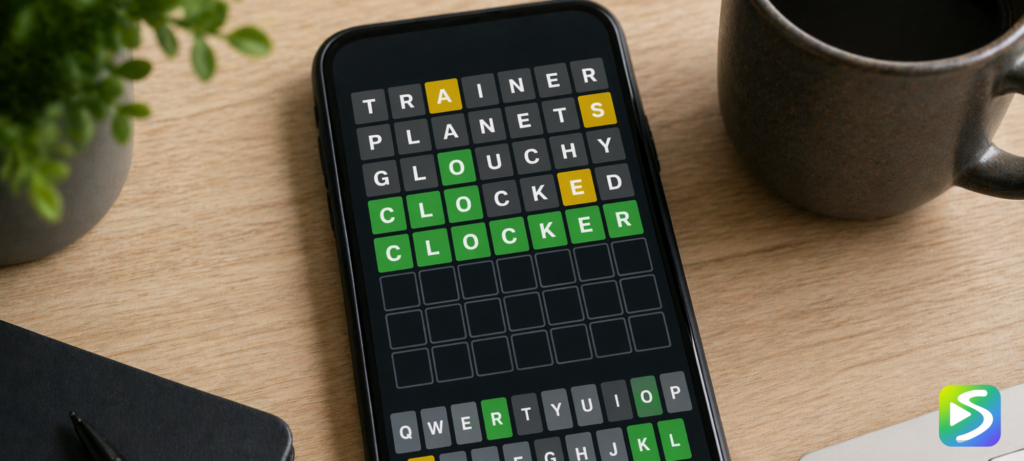
The output is a list of possible answers. If you have confirmed that position three is O, that the word contains N and R in unknown positions, and that the letters A, E, and T are not in the word, a solver returns every seven-letter word in its dictionary that satisfies all three constraints simultaneously. In a well-designed solver, this list also suggests which word to guess next to extract the most information, not just which words are still possible.
The mechanical process is straightforward — it is essentially the same elimination logic you apply manually when playing, just running faster and with no risk of forgetting a constraint. For players who want to understand the strategic principles behind this filtering logic, the how to get better at Septle guide covers the human version of the same process in detail.
The Algorithm Behind Optimal Word Selection
The most sophisticated word puzzle solvers go beyond simple constraint filtering. They use information theory to identify which guess among all valid remaining candidates would, on average, reduce the remaining candidate pool by the largest amount.
The concept at work is entropy — a measure of uncertainty or information content. A guess that splits the remaining candidates roughly in half (regardless of whether it is the answer) reduces entropy more efficiently than a guess that might be the answer but leaves a large pool intact if it turns out to be wrong. This is why optimal solvers sometimes suggest words that seem counterintuitive — they are prioritizing information gain over the chance of an immediate correct guess.
In practice, this means the best second guess is often not any of the words you think the answer might be — it is whichever word, answered or not, will tell you the most about which of your remaining hypotheses is correct. Human players who understand this intuitively tend to solve puzzles in fewer guesses than those who always try to guess the answer as quickly as possible.
What Solvers Reveal About Playing Style
Using a word puzzle solver occasionally reveals something genuinely useful about your own playing style — not the specific answers, but the patterns in your decision-making. Many players discover, when they first use a solver, that they have been suboptimally constrained by a habit of always trying to guess the answer rather than extracting information.
A common revelation: after two guesses have confirmed three letters and eliminated several others, a human player often immediately tries a word they think might be the answer. A solver frequently suggests a completely different word — one that is almost certainly not the answer — because that word would eliminate several more letters and collapse the remaining candidates more efficiently. Running a few of these comparisons between your instinctive choice and the solver’s choice is more instructive than any general strategy advice.
The Septle answer today provides the answer alongside hints rather than a full solver interface — which preserves the satisfaction of working through the puzzle while giving you an exit if you genuinely need it.
The Honest Case for Using a Solver Occasionally
There is a purist argument that using any solver defeats the purpose of a word puzzle game. It is not a persuasive argument if you examine it carefully. The purpose of the game, for most players, is enjoyment and mental engagement. Occasionally using a solver when completely stuck, rather than failing a puzzle and breaking a streak, is a reasonable trade-off that keeps the habit alive.
The more important consideration is frequency. Using a solver to check your reasoning once every few weeks when genuinely stuck is categorically different from using it every day to guarantee completion. The first maintains the habit with occasional assistance. The second replaces the cognitive engagement that gives the habit its value.
A useful middle ground that many players land on: play the puzzle without assistance until you have made at least five or six guesses. If you are still not close after that many attempts, check the answer — either via a solver or via an answer page — rather than exhausting the remaining guesses blind. This preserves most of the cognitive work while preventing the frustration of a completely opaque failure.
Word Solvers vs. Hints: A Practical Distinction
There is a meaningful difference between using a word solver and using a hints page. A solver that gives you a specific next guess to make essentially automates the cognitive work entirely — you follow its instruction without necessarily understanding why. A hints page that tells you, for example, that the word starts with S and contains a double letter gives you information while leaving the reasoning and word retrieval to you.
For players who want assistance without completely bypassing the puzzle, hints represent a better trade-off than solver outputs. The hint format preserves the word retrieval challenge — you still have to generate candidates that match the hint — while reducing the blind-guessing component that produces frustration rather than enjoyment.
This is the philosophy behind the hint structure on the Septle approach — providing enough information to unstick a stuck player without solving the puzzle for them. The distinction between a helpful nudge and a full answer matters for whether the game retains its cognitive value.
What Word Solvers Cannot Do
Word solvers are effective at constraint filtering and information-theoretic optimization, but they cannot develop the pattern recognition and vocabulary intuition that makes human word puzzle players genuinely skilled. The solver processes every guess from scratch using the same algorithm. A human player who has played daily for six months develops increasingly automatic pattern recognition — the -TION ending feeling, the RE- prefix intuition, the sense that a word with O confirmed in position three is probably built around a common -OT- or -OR- structure.
This accumulated intuition is not something a solver has or develops. It is the actual cognitive benefit of daily word puzzle play — the thing that makes experienced players faster and more efficient than beginners even when both are working manually without tools. No solver can transfer this intuition to you; only consistent daily play over time builds it.
Players who want to develop genuine skill rather than solver-assisted completion will find the vocabulary tips and pattern recognition guide more useful than any solver tool — it covers the specific habits that build the intuitive vocabulary access that makes hard puzzles feel tractable.
Frequently Asked Questions
Is there a Septle solver that works reliably?
Several general word puzzle solvers accept constraints from any Wordle-style game and filter valid seven-letter candidates accordingly. You provide the confirmed letters, their positions, the yellow letters and their wrong positions, and the eliminated gray letters — and the solver returns a filtered list. The quality varies; solvers with larger dictionaries and information-theoretic next-guess suggestions are more useful than simple filters.
Does using a Septle solver count as cheating?
Whether solver use counts as cheating depends entirely on how you define the game for yourself. Septle has no enforcement mechanism — there is no leaderboard where results are verified and no competition where solver use would be an unfair advantage over other players. The only person your playing style affects is you. Use tools according to whatever level of assistance aligns with your goals for playing.
Will using a solver hurt my long-term Septle performance?
Using a solver occasionally when genuinely stuck is unlikely to affect your long-term performance significantly. Using it habitually as a shortcut will prevent the development of the pattern recognition and vocabulary intuition that comes from working through difficult puzzles independently. The cognitive benefit of daily word puzzle play depends on doing the cognitive work.
What information does a word solver need to work?
A word puzzle solver needs three types of input: the letters you have confirmed in their correct positions (green tiles), the letters you know are in the word but have placed incorrectly (yellow tiles and their wrong positions), and the letters you have eliminated entirely (gray tiles). The more information you feed it, the more precisely it can filter the remaining candidates.
Are there hints built into Septle itself?
Septle does not include built-in hints within the game interface beyond the color feedback from each guess. External hints pages — like the Septle answer today page — provide spoiler-free clues about the daily word’s category, starting letter, vowel count, and other properties without revealing the full answer. These preserve more of the puzzle experience than a full solver output.