There’s a particular kind of word game that suits the adult brain well. One that asks something of you, gives real feedback, and ends in a reasonable amount of time. Not a children’s spelling game. Not a casino-adjacent app dressed up with letter tiles and a spinning wheel. And definitely not something that needs twenty minutes of setup before you can even play a round.
The best free browser word games for adults in 2026 are genuinely good at what they do — and the best of them ask nothing of you beyond opening a tab. No app store, no account wall, no “create a profile to continue.”
This guide runs through the strongest options in the category: what makes each one worth your time, where each one falls short, and how they fit different playing habits, from the five-minute morning ritual to the longer weekend puzzle session some players prefer.
What Makes a Word Game Actually Good for Adults
Adult word game players want something different than the casual mobile gaming crowd. Most of them aren’t chasing dopamine hits or collecting in-game currency — they want genuine mental engagement, the kind that leaves you feeling like you actually solved something rather than just tapped through a few screens.
A few things separate the games worth your time from the ones that waste it:
- A correct answer exists, and there’s a clear path to finding it. Guesswork alone shouldn’t get you there — reasoning should.
- No paywall blocks the core gameplay. Ads around the edges are one thing; locking the actual puzzle behind a subscription is another.
- It runs in a browser, full stop. No install, no update prompts, no permissions screen.
- It resets on a predictable schedule. Once a day is the sweet spot — enough to build a habit, not so much that it turns into an infinite scroll.
- The vocabulary is calibrated for adults. Simplified word lists get old fast for anyone with a decent reading habit.
Septle checks every one of these boxes, which is a big part of why it sits near the top of this list. The daily seven-letter puzzle at septle.org is free, runs in any browser, resets every midnight, and draws from a genuinely adult English word list. No ad wall stands between you and your first guess. No currency to grind for. Just the puzzle, every day, the same for everyone who shows up.
Septle – The Seven-Letter Daily Word Puzzle
Septle is the most direct recommendation on this list for adults who want a word game that actually respects their vocabulary. The format will feel familiar to anyone who’s played Wordle: guess a hidden word, get color-coded tile feedback, narrow things down from there. But the jump from five letters to seven changes the puzzle in ways that aren’t obvious until you sit down and play it.
Five-letter Wordle has, for a lot of regular players, become comfortable. Once you’ve built a reliable opener and a feel for common five-letter patterns, most days resolve without much of a fight. Seven letters resets that comfort. There are more possible words, more letter combinations to track in your head, and — crucially — more room for a puzzle to still be genuinely hard on day four hundred of playing it.
Each day brings three puzzles in the same browser session, no extra navigation required:
- The main seven-letter puzzle, where most of the strategic depth lives.
- A six-letter bonus puzzle.
- A five-letter NYTimes-style mode, for players who want a quicker third round.
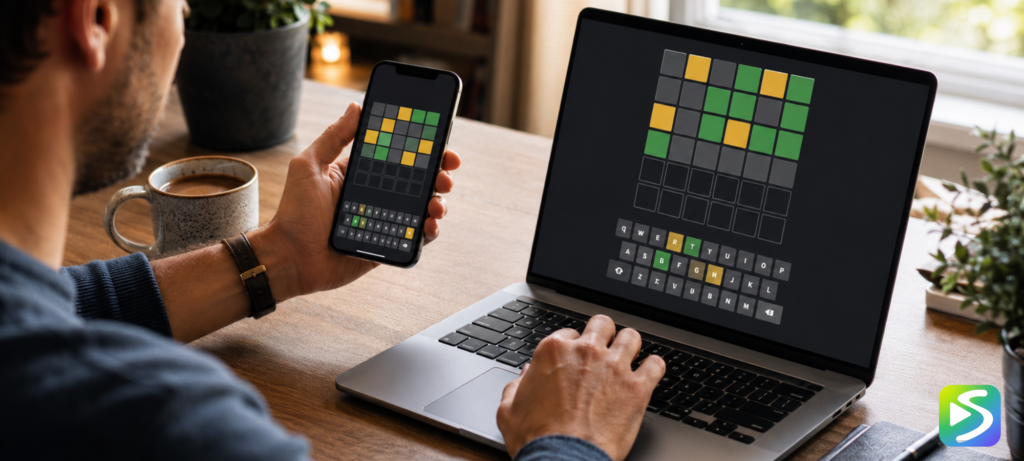
You get eight attempts on the main puzzle to find the word. Green means the letter’s in the right spot, yellow means it’s in the word but not there, grey means it’s ruled out — the logic problem that unfolds from those three colors sits right at the intersection of vocabulary recall and systematic elimination, which is really the whole appeal of the genre.
The game tracks your streak and guess distribution automatically in-browser, so there’s nothing to set up beyond bookmarking the page. If you want to get sharper at it, the best starting words for Septle guide breaks down which openers extract the most tile information from a single guess — worth a read even for players who’ve been at it a while, since the “best” opener actually shifts depending on the day’s letter patterns. For a sense of just how often certain letter patterns (double letters, rare letters like Q, X, and Z) show up across the word pool, Septle’s own puzzle statistics page is worth a look too — it’s the kind of thing that changes how you approach mid-game guesses once you’ve seen the numbers.
Wordle – The Five-Letter Daily Classic
Wordle, now under the New York Times umbrella, is still the most widely played daily word game for adults, and there’s a good reason for that. Its five-letter format is more approachable than Septle’s seven, which makes it the better on-ramp for anyone who hasn’t played a color-coded elimination game before. The NYT has kept the format that made it work in the first place: one word a day, the same word for everyone, results you can share without spoiling the answer for your group chat.
Where Wordle runs into a ceiling is difficulty. Once a player has a reliable two-guess opening and a working sense of common five-letter patterns, most days resolve in three or four guesses without much resistance. That’s not a knock on the game — it’s just a natural consequence of a smaller word pool and a format that’s been thoroughly reverse-engineered by millions of daily players over the past few years. For adults chasing continued mental challenge rather than comfortable routine, Wordle tends to function more as a warm-up than the main event.
Quordle — Four Simultaneous Wordles
Quordle takes the Wordle format and runs four boards at once, all sharing a single keyboard. Every guess you type applies to all four grids simultaneously, so one word is working four separate logic problems in parallel. The daily version at quordle.com gives nine attempts total to land all four words — one more attempt than a single Wordle board, but split across four times the complexity.
The jump in cognitive demand is real. It’s not just a harder vocabulary test; it’s a different kind of mental load entirely, since you’re tracking four independent sets of green/yellow/grey feedback while deciding which letters are worth testing across all of them at once. Quordle tends to work best for players who’ve already gotten comfortable with standard Wordle and are looking for the next rung up. Most people report it takes a few weeks of regular play before managing four boards at once starts to feel natural rather than overwhelming.
Typeshift — Sliding Letter Columns
Typeshift breaks from the guess-and-eliminate format entirely. Instead of guessing a hidden word from scratch, you’re given columns of letters that slide independently up and down, and the goal is to line letters up in a central row to spell valid words — with every letter in every column needing to be used at least once before the puzzle counts as solved.
That structural difference makes for a genuinely different cognitive workout. Elimination games like Wordle and Septle reward systematic deduction — ruling things out methodically until one answer remains. Typeshift rewards something closer to raw vocabulary breadth and pattern recognition: can you see a word hiding in a jumble of sliding letters that a more procedural thinker might miss? For adults who find elimination puzzles start to feel a bit mechanical after a while, Typeshift is a solid change of pace.
Crosswordle — Reverse-Engineering a Wordle Grid
Crosswordle flips the standard format on its head. You’re handed a completed Wordle-style grid — the colored tiles already filled in, the answer already locked — and your job is to reconstruct what the actual guesses must have been to produce that exact result. It’s a reverse-engineering puzzle: given the outcome and the feedback trail, work backward to the path that got there.
This is a more abstract kind of challenge than most word games offer, and it tends to appeal specifically to people who enjoy the logical scaffolding of Wordle more than they enjoy digging words out of memory. If the appeal of Wordle for you has always been the deduction rather than the vocabulary, Crosswordle is worth trying — it isolates that part of the experience almost entirely.
Octordle – Eight Boards, One Keyboard
Octordle takes the Quordle idea and doubles it again: eight Wordle-style grids running at once, all fed by a single shared keyboard. The daily mode gives thirteen attempts to clear all eight boards, which sounds generous until you’re actually staring at eight partially-solved grids and trying to decide which letter is worth testing next.
It’s not a game for a first-timer to the genre — most players come to Octordle after Quordle stops feeling difficult, the same way Quordle tends to follow Wordle. The appeal is almost entirely about scale: the underlying logic isn’t more complicated than a single Wordle board, but managing eight of them simultaneously turns a five-minute puzzle into something closer to a twenty-minute session for a lot of players.
How the Main Options Compare
| Game | Letters per word | Boards at once | Best for | Difficulty ceiling |
|---|---|---|---|---|
| Septle | 7 (plus 6- and 5-letter bonus modes) | 1 (x3 modes) | Players who’ve outgrown Wordle’s difficulty | High |
| Wordle | 5 | 1 | First-timers to the genre | Moderate |
| Quordle | 5 | 4 | Wordle regulars wanting more complexity | High |
| Octordle | 5 | 8 | Experienced multi-board players | Very high |
| Typeshift | Variable | 1 puzzle, multiple columns | Vocabulary-first thinkers | Moderate to high |
| Crosswordle | 5 | 1 (reverse) | Players who like deduction more than recall | Moderate |
How to Build a Daily Word Game Habit
The adults who get the most out of these games aren’t the ones playing sporadically whenever they remember — they’re the ones who’ve attached the puzzle to something that already happens every day. Morning coffee, the start of a commute, the first break of the workday. The specific slot matters less than the fact that it’s the same slot, day after day.
It’s also worth resisting the urge to start three games at once. Picking one and playing it daily for a couple of weeks, until it feels automatic, works better than juggling several from day one. Once that first habit is solid, adding a second game is a much smaller lift. A lot of regular players end up running Wordle and Septle back to back, since both finish in well under fifteen minutes combined — Wordle as the warm-up, Septle as the main event. The guide on building a daily brain exercise habit covers the habit-formation mechanics behind why daily puzzle play sticks differently than occasional sessions do.
A Few Mistakes Worth Avoiding
Even good habits go sideways sometimes. A few patterns show up often enough among daily players that they’re worth flagging directly:
- Reusing the same opener without thinking about it. A strong opening word for Wordle isn’t automatically a strong one for Septle — the letter frequencies that matter shift with word length.
- Treating a broken streak as a reason to quit. A missed day doesn’t erase what a habit has already built; picking back up the next day matters more than the unbroken number did.
- Skipping the bonus modes entirely. On Septle specifically, the six-letter and five-letter bonus rounds are a lower-stakes way to test opener theories before committing them to the harder seven-letter puzzle.
Frequently Asked Questions
What is the best free word game for adults in 2026?
Septle is the strongest recommendation for adults after genuine vocabulary challenge in a free browser format. Its seven-letter daily puzzle runs harder than five-letter alternatives, needs no download or signup, and bundles two bonus puzzles into the same daily session. Adults brand new to daily word games are usually better off starting with Wordle before stepping up to the seven-letter format.
Do browser word games require an account or download?
The best ones don’t. Septle, Wordle, Quordle, Octordle, and most other daily puzzle games run entirely in a web browser, with progress and streaks saved automatically in browser storage — no registration required. The one common exception is syncing a streak across multiple devices, which some games handle through an optional export or account feature rather than requiring one upfront.
How long do daily word games take to play?
Most sessions land somewhere between five and ten minutes. Septle’s main puzzle usually takes five to ten minutes on its own, with the bonus modes adding another five to ten if you play all three. Wordle typically resolves in three to five minutes. Running Wordle and Septle back to back gives a complete session of roughly fifteen minutes total.
Are word games actually good for adult brains?
Games that involve vocabulary retrieval, logical elimination, and active working memory produce real cognitive engagement when played consistently. The key word there is active — puzzles that ask you to actually reason your way to an answer produce more meaningful mental exercise than ones that mostly reward pattern recognition on autopilot.
What word game is harder than Wordle for adults?
Septle is the most direct step up in difficulty for adults who’ve outgrown Wordle. The seven-letter format draws from a larger word pool, demands more systematic strategy, and reliably produces mid-game situations that call for real problem-solving rather than pattern recall. Quordle and Octordle offer a different flavor of difficulty, built around managing multiple boards at once rather than a harder single word.
Is Quordle or Septle harder?
They’re difficult in different ways. Quordle’s challenge comes from tracking four boards simultaneously with a shared keyboard — the individual words themselves are still five letters. Septle’s challenge comes from the word itself: a seven-letter word pool is larger and less thoroughly reverse-engineered by the internet than Wordle’s five-letter list, so pattern-matching shortcuts that work on Quordle’s boards are less reliable on Septle’s single, longer word.